23 October 2026 · The Marble Network
Travertine Marble: Types, Uses, Finishes and Price in India
Travertine is a natural stone known for its earthy colours, distinctive pores, and timeless architectural appeal.
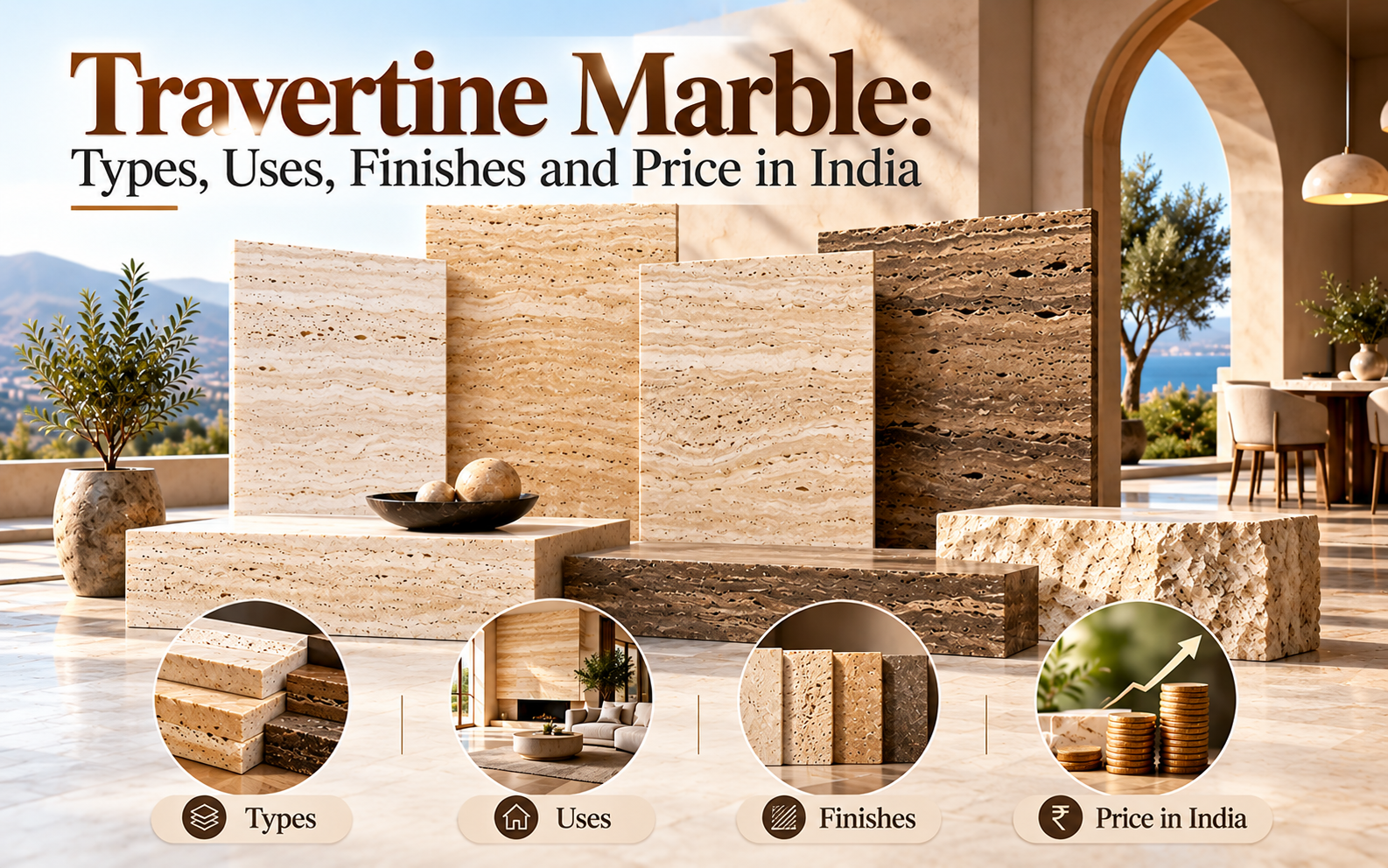
Travertine Marble: Types, Uses, Finishes and Price in India
Travertine is a natural stone known for its earthy colours, distinctive pores, and timeless architectural appeal. Although it is often marketed as travertine marble, travertine is technically a type of limestone formed by mineral deposits from natural water sources. Its warm appearance and textured surface make it a popular choice for luxury homes, hotels, villas, and contemporary commercial interiors.
From elegant flooring and bathroom walls to outdoor patios and decorative feature walls, travertine offers versatility across different design styles. However, selecting the right variety requires understanding its types, finishes, maintenance requirements, and overall cost.
This guide explains the main types of travertine, where they can be used, which finishes are available, and what affects travertine prices in India.
Table of Contents
- What Is Travertine Marble?
- Popular Types of Travertine
- Common Uses of Travertine in Interiors
- Travertine Finishes Explained
- Travertine Marble Price in India
- How to Choose the Right Travertine
- Frequently Asked Questions
- E-E-A-T: Expert Buying Guidance
1. What Is Travertine Marble?
Travertine is a sedimentary limestone formed when calcium carbonate precipitates from mineral-rich water, commonly around springs. During its formation, gas bubbles and other natural processes create characteristic pores and cavities. These features give travertine its recognisable texture and organic appearance.
Its colours range from ivory and cream to beige, walnut, silver, and light brown. Some varieties feature subtle linear patterns, while others have more noticeable colour variations.
For homeowners exploring Marble Design in India, travertine offers an alternative to highly polished stone surfaces. It works particularly well in Mediterranean-inspired homes, modern luxury interiors, rustic designs, and spaces that emphasise natural materials.
2. Popular Types of Travertine
Travertine is available in several colour variations and surface styles. The most suitable type depends on the interior palette, lighting, application, and maintenance preferences.
Beige Travertine
Beige travertine is one of the most versatile options. Its warm, neutral colour complements wooden furniture, cream upholstery, natural fabrics, and earthy design schemes.
It is commonly used for living room flooring, wall cladding, bathrooms, and hotel interiors where a welcoming, understated appearance is desired.
Ivory Travertine
Ivory travertine features a lighter, softer colour that can help create an open and elegant atmosphere. It pairs well with minimalist furniture, neutral walls, and contemporary finishes.
Unlike uniformly white stones, ivory travertine usually retains natural tonal variations and surface character.
Silver Travertine
Silver travertine typically features grey, silver, and beige undertones. Depending on the variety, its patterns may appear linear or cloud-like.
It is suitable for modern interiors, feature walls, selected flooring applications, and architectural projects that require a cooler colour palette.
Walnut Travertine
Walnut travertine has deeper brown shades that create a rich, natural appearance. It works well with timber, bronze fittings, warm lighting, and interiors inspired by traditional or contemporary luxury design.
When comparing travertine with Italian Marble in India, remember that travertine is a distinct natural stone with different geological characteristics. Its pores, texture, and colour variation distinguish it from many crystalline marble varieties.
3. Common Uses of Travertine in Interiors
Travertine can be used in several residential and commercial applications, provided the selected variety and finish are appropriate.
Flooring: Travertine creates a warm, natural look in living rooms, corridors, and bedrooms. The finish should be chosen according to foot traffic, cleaning requirements, and slip resistance.
Wall cladding: Travertine feature walls add texture and depth to living rooms, entrance areas, and reception spaces. Linear patterns can create a more contemporary architectural effect.
Bathrooms: Travertine can be used for vanity surrounds, selected wall surfaces, and other bathroom features. Proper sealing, ventilation, and maintenance are important in moisture-prone environments.
Outdoor areas: Certain travertine products are suitable for patios, pathways, and pool surrounds when selected for outdoor conditions. Slip resistance, drainage, weather exposure, and local climate should be considered.
Decorative features: Travertine can complement fireplaces, staircases, and selected furniture elements, giving interiors a cohesive natural-stone aesthetic.
Although White Marble in India is often chosen for bright, polished interiors, lighter travertine varieties can also deliver a soft appearance with more visible texture and organic variation.
4. Travertine Finishes Explained
The finish affects travertine's appearance, feel, maintenance, and suitability for different spaces.
Polished Finish
A polished finish creates a smooth, reflective surface. It can emphasise the stone's colours and patterns, making it suitable for selected interior applications where a refined appearance is desired.
Honed Finish
A honed finish is smooth but generally less reflective than a polished finish. It provides a restrained, contemporary appearance and is popular for interior flooring and wall surfaces.
Brushed Finish
A brushed finish creates a textured surface that highlights the stone's natural character. Its suitability depends on the specific product and intended use.
Tumbled Finish
A tumbled finish produces a weathered, aged appearance with softened edges. It is often used in rustic, Mediterranean, and traditional designs.
Travertine can also be supplied with its natural pores left open or filled using an appropriate filler. Filled travertine typically has a more uniform surface, while unfilled travertine retains a more pronounced natural texture. The best option depends on the application and maintenance expectations.
5. Travertine Marble Price in India
Travertine prices in India vary considerably according to the stone's origin, grade, thickness, finish, dimensions, availability, and supplier. Imported products may also involve transportation, handling, and import-related costs.
Rather than relying on a single market price, request a current quotation for the exact variety and specifications you need. Ask whether the quoted amount covers only the material or also includes cutting, transportation, wastage, and installation.
Buyers exploring Kishangarh Marble in India may find a range of natural-stone products through marble traders and processors. However, the location of a seller does not automatically establish the stone's country of origin.
Before purchasing, compare samples or full slabs, confirm the surface finish, and inspect the material for visible defects. Travertine's natural variations mean that the delivered stone may not look exactly like a small sample or online photograph.
6. How to Choose the Right Travertine
Start by identifying where the stone will be installed. Interior walls, high-traffic flooring, bathrooms, and outdoor paving each have different performance requirements.
Next, consider colour, pattern, finish, and maintenance. Lighter varieties can complement bright interiors, while darker shades create contrast and warmth. Textured finishes may suit outdoor or rustic settings, but suitability should always be assessed for the specific location.
When researching Michael Angelo Marble in India, verify the exact product description, origin, and technical specifications with the supplier. Trade names alone are not sufficient evidence of a stone's origin or characteristics.
Assess Quality Marble in India by checking material consistency, surface condition, product transparency, and the supplier's ability to explain installation and maintenance requirements. For Statuario Marble in India, buyers are generally evaluating a different marble variety, so compare it with travertine based on the intended design and application rather than assuming both stones have identical properties.
Finally, consult an experienced stone professional before installation. Correct substrate preparation, suitable adhesives, appropriate sealing, and ongoing care can significantly influence the performance and appearance of natural stone.
7. Frequently Asked Questions
1. Is travertine marble actually marble?
Travertine is technically a sedimentary limestone, not marble in the strict geological sense. However, the term “travertine marble” is commonly used in the stone trade.
2. Which travertine colour is best for luxury interiors?
Beige and ivory varieties are versatile choices for elegant interiors. Silver and walnut travertine can be suitable when a cooler or deeper colour palette is preferred.
3. Is travertine suitable for bathrooms?
Yes, selected travertine products can be used in bathrooms. Appropriate sealing, maintenance, ventilation, and slip-resistant finishes are important, especially in wet areas.
4. What is the difference between filled and unfilled travertine?
Filled travertine has its natural pores filled with a suitable material, creating a more uniform surface. Unfilled travertine retains more visible cavities and a more textured appearance.
5. How should travertine be maintained?
Use a cleaner recommended for natural stone, wipe spills promptly, and avoid acidic cleaning products. Follow the supplier's advice on sealing and routine maintenance.
8. E-E-A-T: Expert Buying Guidance
Selecting travertine requires attention to geological characteristics, product specifications, installation conditions, and long-term care. Since natural stone varies between slabs and batches, buyers should inspect the actual material wherever possible and verify product claims through available documentation.
For reliable results, consult a qualified stone supplier, fabricator, or installer who can assess the stone's suitability for the intended application. Clear quotations, transparent product information, and practical maintenance guidance help homeowners make informed purchasing decisions.
Conclusion
Travertine is an attractive natural stone for homeowners seeking warmth, texture, and timeless architectural character. Its beige, ivory, silver, and walnut varieties provide options for a wide range of interiors, while polished, honed, brushed, and tumbled finishes offer different visual and practical benefits.
Before choosing travertine, compare the stone's appearance, intended use, finish, maintenance requirements, and total installation cost. With careful selection and professional installation, travertine can become a distinctive and enduring feature of a residential or commercial space.
Sourcing something like this?
Tell us the project and we will shortlist against spec, application and budget — not the catalogue.